BlogOctober 29, 2026
Seven Fire Pit Installation Mistakes That Crack Stone and Scorch North Texas Patios
Learn the seven fire pit installation mistakes that crack North Texas stone and scorch patios, and how to avoid them with proper drainage and materials.
A fire pit should anchor a North Texas evening, not crack apart after the first hard freeze. Clay soil, trapped moisture, and the wrong stone combine to create the most common fire pit installation mistakes we see across Fort Worth, Southlake, and the surrounding metroplex.
After two decades of site work on more than 240 private estates, our team has learned which details fail first — and how to keep them from failing on your patio.
Below are the seven mistakes that crack stone and scorch patios — and how to avoid each one.
Why North Texas Soil and Drainage Crack Fire Pit Stone
North Texas sits on expansive clay that swells when wet and shrinks when dry. Without a properly compacted base, that movement settles unevenly and transfers stress straight into the stone above.
Drainage is the quieter failure. Water trapped beneath or behind the stone freezes and thaws through winter, or turns to steam when the fire pit heats up, creating pressure that cracks stone and erodes mortar joints.
Choosing Fire-Rated Stone and Brick to Prevent Spalling
Porous or wet stone can spall — flake or break apart — when exposed to high heat, and in extreme cases trapped moisture can cause it to explode. The interior of a fire pit should always use fire-rated brick or refractory material, not whatever stone looks good on the outside.
| Material | Heat Tolerance | Moisture Risk | Best Use |
|---|---|---|---|
| Fire brick / refractory brick | High | Low | Firebox interior |
| Natural granite or basalt | Moderate to high | Low to moderate | Fire pit surround |
| Porous limestone or river rock | Low | High | Never inside the firebox |
| Standard concrete block | Moderate | Moderate | Only with a fire-rated liner |
- Refractory material
- A heat-resistant material, such as fire brick, designed to withstand high temperatures without cracking or spalling.
For a deeper look at what goes into a Fort Worth firebox, read our guide to fire brick and firebox materials.
How to Install a Fire Pit Ring Without Cracking Stone
A fire pit ring that is out of level or too small for the firebox concentrates heat on one side of the stone. That uneven thermal expansion is a common cause of cracks that appear months after installation.
Excavate and compact the base
Remove organic soil and compact a crushed stone base in lifts. North Texas clay expands and contracts with moisture; a stable base prevents the ring from settling unevenly.
Set the ring level
Use a level in multiple directions. A ring that is even slightly out of level concentrates heat and stress on one side of the firebox.
Size the ring to the firebox
The ring should match the interior diameter of the fire pit. An undersized ring forces flames against the stone and creates uneven thermal expansion.
Backfill and drain
Leave a drainage gap or gravel layer beneath the ring so water can move away instead of pooling against the stone.
Our fire pit installation guide for Fort Worth walks through the full local process, from base prep to final stone.
Clearance, Wind, and Code Mistakes That Scorch Patios
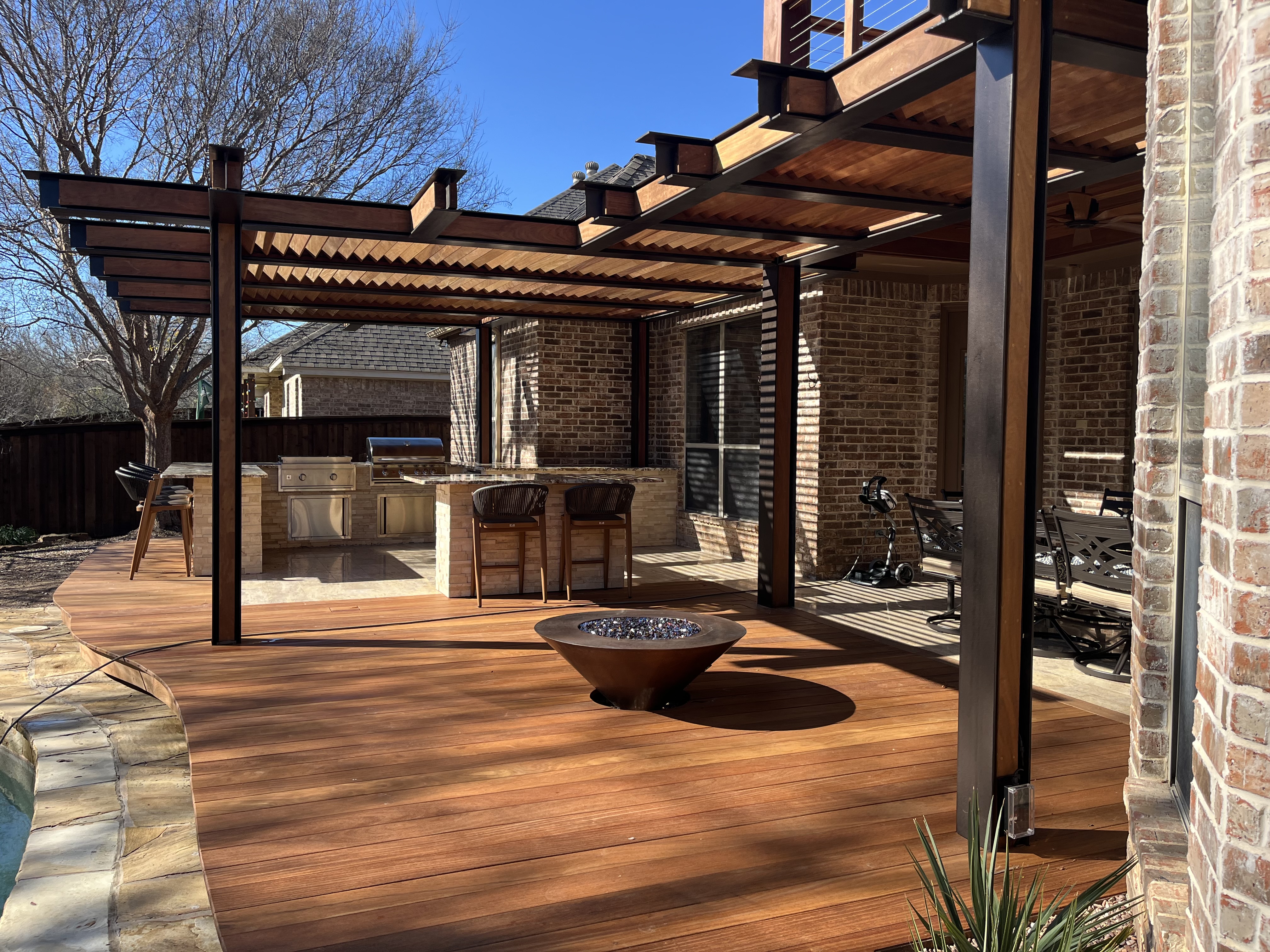
Placing a fire pit too close to a covered patio, eave, or combustible planting bed can scorch surfaces and create a fire risk. Wind exposure also matters: a fire pit placed in a wind tunnel will throw heat and embers unpredictably.
- Too close to eaves or pergolas — Heat rises and collects under covered structures, scorching wood and paint over time.
- Combustible landscaping — Ornamental grasses, shrubs, and mulch placed too close can dry out and ignite.
- Ignoring HOA and municipal setbacks — Setback requirements, fuel type rules, and spark screen mandates vary across DFW municipalities and HOAs.
Before you build, check local code and your HOA. Setbacks, fuel type, and spark screen requirements are not uniform across Fort Worth, Southlake, Colleyville, Keller, and the surrounding cities.
Gas Fire Feature Ventilation and Fuel Line Errors
For gas fire features, an improper air mix or an undersized fuel line causes sooting, weak flames, and safety hazards. Proper ventilation and correctly sized lines are not details to leave to guesswork.
Proper ventilation means placing vent blocks low on the enclosure so fresh air can enter and hot gases can escape, and setting the air-mix valve so the flame burns clean and blue rather than yellow and sooty. Undersized fuel lines starve the burner and cause weak flames.
Placement affects ventilation as much as aesthetics. Our guide to outdoor fireplace placement in Benbrook explains how site, wind, and venting work together on a North Texas estate.
When to Bring in a Licensed Installer
Fire features sit at the intersection of structure, fuel, and code. Terraform Outdoors' fire feature team handles site-specific planning, material selection, and code compliance as one in-house crew, so the stone, gas line, and drainage are designed together rather than patched together.
With 20+ years of experience and 240+ private estates completed, we are licensed, insured, and family-owned. If you are planning a fire pit or outdoor fireplace in the Dallas-Fort Worth area, talk with our fire features team about a consultation.
◇ Good to Know