BlogSeptember 10, 2026
Fire Brick and Firebox Materials: What Goes Into a Fort Worth Outdoor Fireplace
Learn how choosing the right fire brick Fort Worth TX keeps your outdoor fireplace safe and durable through years of extreme Texas weather.
An outdoor fireplace has to be two things at once: a beautiful piece of masonry and a structure that safely contains fire. The stone you see from the terrace gets all the attention, but the material lining the firebox — the fire brick — is what determines whether the fireplace still performs like new after a decade of Texas summers and winter cold fronts.
Search fire brick Fort Worth TX and you will find plenty of product spec sheets and very little about how that choice fits into a finished outdoor room. This guide covers what fire brick actually is, how it compares with the other firebox options, and why our local climate should shape the decision long before anyone lays a single course — the same thinking we bring to every fire feature we build.
What Is Fire Brick and Why Does It Matter for Your Outdoor Fireplace?
- Fire brick
- A dense refractory brick, high in alumina and silica, engineered to withstand repeated direct flame contact. It lines the firebox — the chamber where the fire actually burns — and protects the structural masonry behind it.
Standard face brick and clay pavers are manufactured for appearance and weather resistance, not for sustained heat. They are comparatively soft and porous, so repeated heating and cooling drives moisture and thermal stress through the body of the brick until it spalls, crazes, or cracks outright.
Fire brick is formulated and fired differently. Higher alumina content and greater density give it the thermal shock resistance to take a hot fire, cool overnight, and do it again the following weekend without degrading — which is exactly the duty cycle an outdoor fireplace lives with.
Firebox Material Options: Fire Brick, Refractory Panels, and Castable Refractory
There are three material families we consider when detailing a firebox, and each one changes the build sequence, the finished look, and how the fireplace is maintained years from now.
| Firebox material | What it is | Best suited to | Trade-off |
|---|---|---|---|
| Fire brick | Individually laid refractory units set in refractory mortar | Traditional and custom fireboxes where coursing patterns, herringbone layouts, and future repairs matter | Labor-intensive; a skilled mason has to lay and joint every unit |
| Refractory panels | Pre-cast refractory sections dropped into the firebox opening | Projects where speed and consistency are the priority | Limited design customization; sizes and surface texture are what the manufacturer offers |
| Castable refractory | A refractory mix poured or formed in place into a monolithic liner | Seamless, sculptural, or non-standard firebox shapes | Higher material cost and specialized forming and curing skill |
No option is universally best. The right answer depends on the geometry of the firebox, how the fireplace reads against the rest of the hardscape, and whether the design calls for a visible coursing pattern or an unbroken surface.
How Fort Worth's Climate Impacts Firebox Material Performance
North Texas asks a great deal of masonry. A firebox here can sit through triple-digit summer afternoons, get lit for a cool evening, then face a hard freeze a few months later — all in the same structure, uncovered, outdoors.
That swing is why thermal cycling matters more locally than raw temperature rating. Materials expand when heated and contract when they cool, and every cycle works at the joints; porous materials also take on rainwater, which expands as it freezes and pushes the material apart from the inside.
Practically, that means selecting for density and thermal shock resistance rather than for the lowest material cost, and detailing the fireplace so water has somewhere to go. The same thinking applies to any exterior fire feature, which is why we cover it alongside pits and bowls in our fire pit installation guide for Fort Worth.
Fire Brick as a Design Decision: Aesthetics Meet Engineering
The firebox is not hidden. When the fireplace is unlit — which is most of the time — you are looking straight into that lining from the seating area, and its color, joint pattern, and texture become part of the composition.
Fire brick comes in a range of tones and can be laid in patterns — running bond, stacked, herringbone — that either recede behind the stone surround or deliberately contrast with it. A warm buff liner against light stacked stone reads very differently from a dark, tightly jointed firebox in the same opening.
Cohesive design means the inside of the fireplace agrees with the outside of it, and with the pavers, walls, and planting around it. That philosophy — treating an outdoor space as one integrated work of art rather than a set of separate purchases — is the thread through everything we build, and it is the subject of our piece on cohesive outdoor design for DFW estates.
Safety and Structural Integrity: Why Proper Installation Matters
The best fire brick in the world will fail if it is set incorrectly. Ordinary masonry mortar breaks down under firebox temperatures, and a liner laid tight with no allowance for movement will crack itself apart as it expands.
Establish the footing and structural shell
The fireplace mass is engineered and built first, on a footing sized for the load and the soil — the same structural discipline behind our retaining walls and stone masonry work.
Select the firebox material with the design
Fire brick, refractory panels, or castable refractory is chosen alongside the stone selection, not after it, so the interior and exterior are resolved together.
Set the liner in refractory mortar
Refractory mortar — not standard masonry mortar — bonds the firebox. Joints are kept thin and consistent, because thick joints are the first thing to fail under heat.
Detail for thermal movement
Expansion allowance is built into the liner and at the transition to the surrounding masonry so heat cycling has somewhere to go instead of cracking the assembly.
Cure before the first fire
The assembly is allowed to cure, then brought up with a controlled first fire rather than a full burn, which drives off residual moisture without shocking the new refractory.
Every one of those steps protects the same thing: the structural integrity of the whole fireplace. A compromised liner lets heat and moisture reach masonry that was never meant to take either.
The Advantage of Integrated Masonry and Fire Feature Expertise
Firebox decisions sit exactly where two trades meet — fire features and stone masonry. When those are separate contractors, the material conversation usually happens after the surround is already designed, and the liner becomes whatever fits.
Every trade, one team
All of our work is built in-house, so the mason setting the fire brick and the designer specifying the stone are on the same crew.
20+ years and 240+ private estates completed
The large majority of them across the Dallas-Fort Worth metroplex.
Sustainable, site-specific planning
Durable, correctly specified refractory materials last, and material that lasts is material that never has to be demolished and replaced.
Licensed, insured, and family-owned
The same people who plan the project are accountable for how it performs.
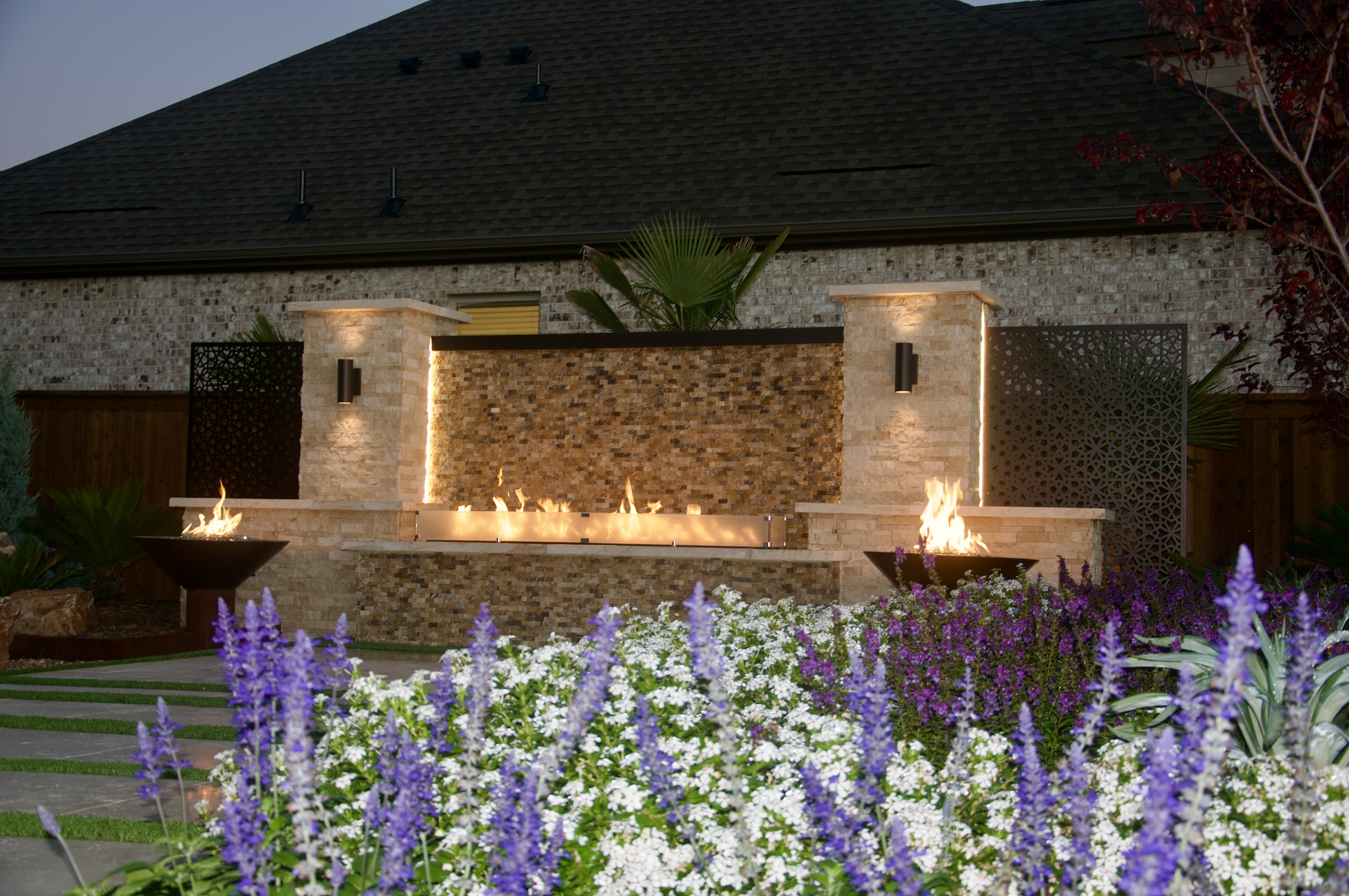
Site-specific planning also means the answer changes from property to property. Exposure, prevailing wind, how the fireplace relates to the house, and how often you will actually use it all feed into which firebox material we recommend — and we build across Fort Worth and the surrounding communities, each with its own site conditions.
Building Your Fort Worth Outdoor Fireplace with Confidence
Fire brick selection is a design decision, not a line item. It sets the character of the firebox you look into every evening, and it determines how gracefully the fireplace ages through our summers and freezes.
If you are planning an outdoor fireplace or another fire feature for your property, we would welcome the conversation. Reach out to Terraform Outdoors and we will walk your site, talk through firebox materials in the context of your whole outdoor space, and design something built to last.
◇ Good to Know